
JAI Featured Member/April 2026
Lorin Fife
JAI Featured Member
Lorin Fife
April 2026
JAI Featured Member
Lorin Fife
April 2026
A stranger in a strange land, I came to my craft as an artist late in life, although I have always been passionate about art as a vehicle for exploration and understanding of the world around us, and for communication between human beings.
I am an attorney by training and an artist by compulsion. My passions and professional background doomed me to focus on life’s ambiguities, the mystical qualities of Hebrew and the ways in which words and images intersect with and reinforce or contradict one another. As a convert to Judaism and as an individual who has lived as an immigrant in an alien but Jewish society (Israel), I also have an intrinsic interest in the fluidity and elasticity of identity, the ambiguities associated with identity, and the development of prejudices, traditions and expectations found within my own Jewish and other communities. I have found it fertile territory for my art. My work in a variety of media exhibits inspirations from the work of artists like Man Ray, Freud, Henri, Magritte, Schiele, Longo, Sherman, Duchamp, Rafael Soyer, Munch and Morimura who have challenged viewers to understand a “reality” that may seem to contradict the perceived image or that may contain inherent ambiguities.
Believing that every human being is unique but created in the image of the divine – b’tselem Elohim – and recalling the commandment that recurs frequently in the Torah to avoid oppressing the “Ger” (even the definition of Ger as a convert or as some type of resident alien is ambiguous, although we know that all Jews were Gerim in Egypt), I attempt to discover and explore an intense union with each of my subjects and to reveal that spark of the divine light with which each of them is infused. Glorying ultimately in the humanity of each of my human subjects, I hope that my paintings, sculptures and other projects will trigger questions that challenge our assumptions about the world around us and, in so doing, assist each of us to connect more intimately with that spark of life so that we all can work together in partnership to repair our very imperfect world. I have exhibited my art at a variety of venues in Los Angeles over the years.
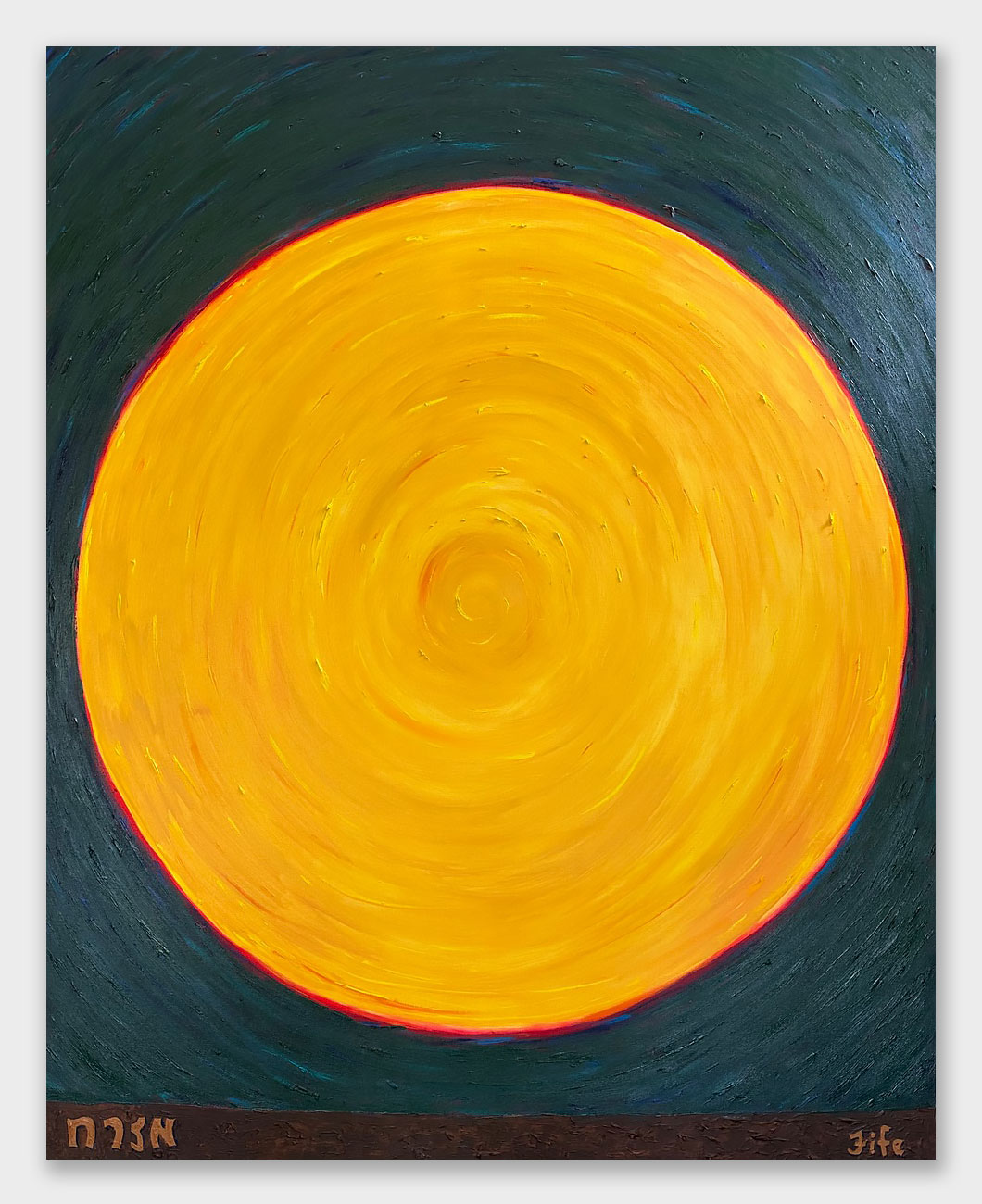
Mizrach (“East”) by Lorin Fife, oil, 60″ x 48″
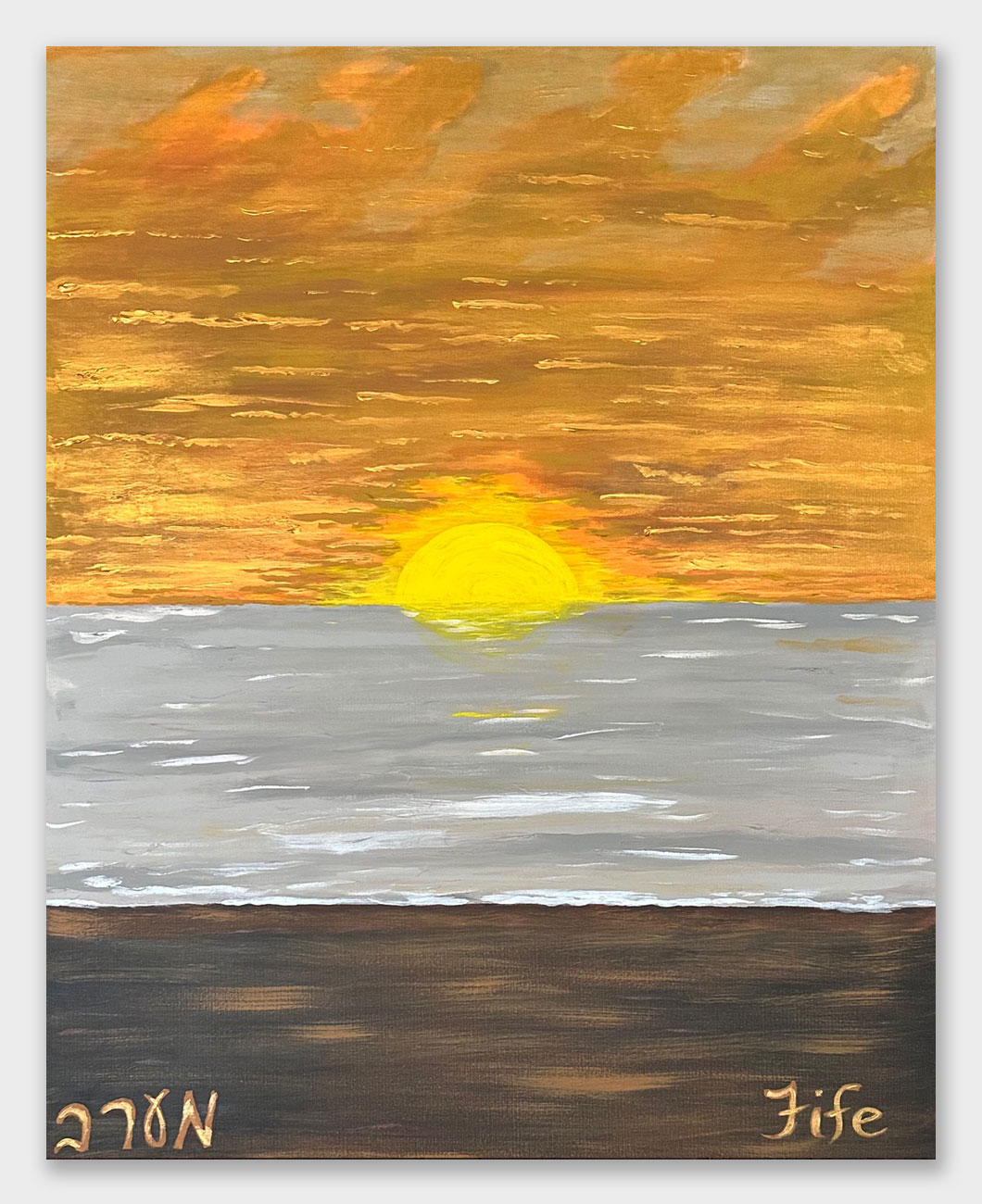
Ma’arav (“West”) by Lorin Fife, oil, 60” x 48″
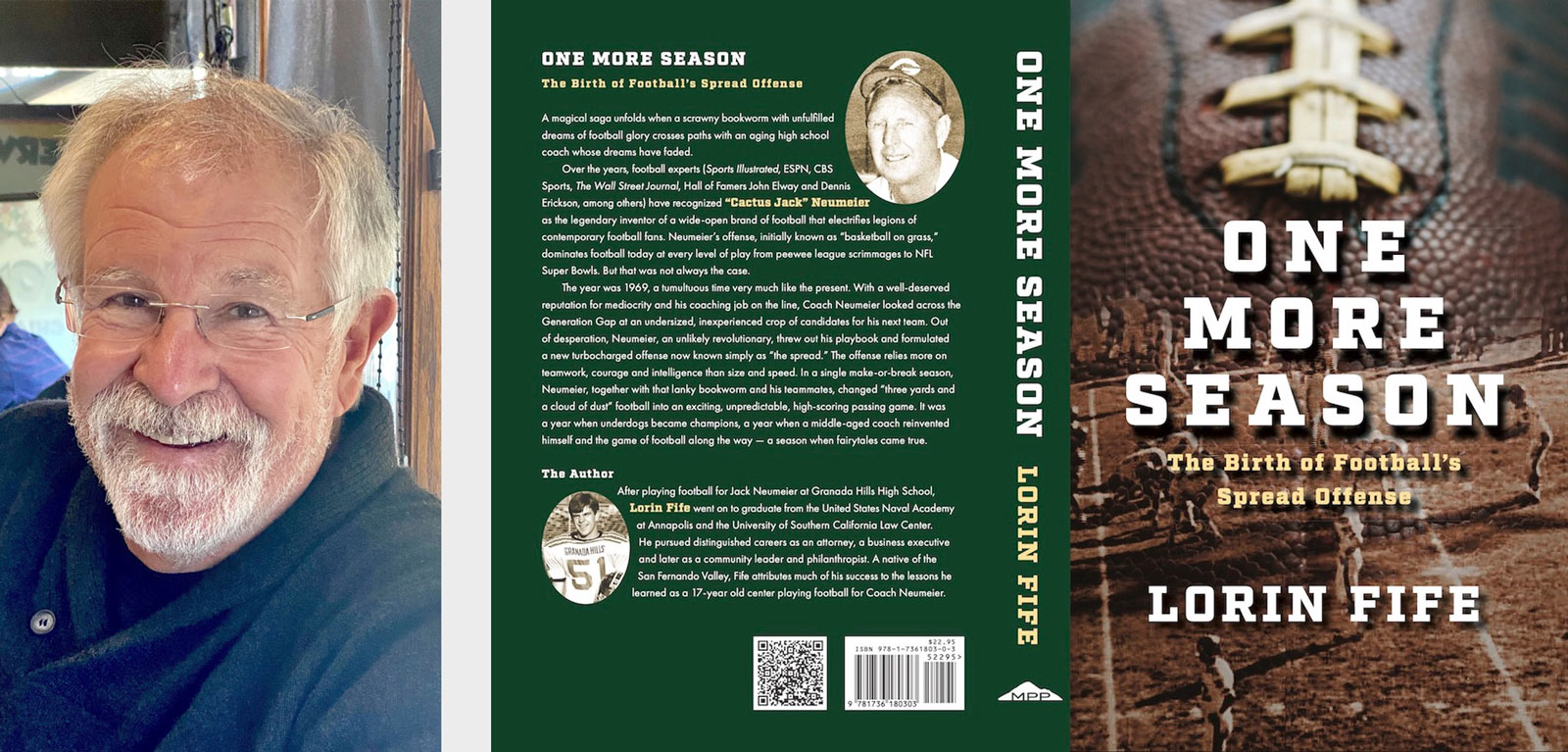
My creative urges over the last few years have also focused on the written word, and I published an award-winning memoir, One More Season: The Birth of Football’s Spread Offense, available through Amazon.
My literary agent, Timothy Hays in New York, is currently in negotiations to produce a film version of One More Season.
Retired from the practice of law, I have continued to take on leadership roles in the organized Jewish and broader community, including Chairman of the Board of the Jewish Community Foundation of Los Angeles, Chairman of the Tel Aviv-Los Angeles Partnership, Vice President for the Israel and Overseas department of the Jewish Federation of Greater Los Angeles, a member of the Board of Governors of the Jewish Agency for Israel, and President and Chairman of the Board of Adat Ari El, a Conservative congregation and the first Jewish synagogue in the San Fernando Valley.
I currently serve as President of The Colony at Mandalay Beach Owners Association, a 440-unit, 40 acre community on the beach in Oxnard and as President of a nonprofit organization, Friends of Oxnard Beaches, dedicated to maintaining and enhancing our environment and the quality of our beaches in the area north of Los Angeles. Over the years, I have also been a husband of over 50 years, a father, a son, an immigrant and an émigré, a waiter, a naval officer, a fruit picker, a football player, a Wall Street attorney, a senior executive in a Fortune 500 company, general counsel to Eli Broad, a communal activist, a published author and a saba to five beautiful grandchildren. But at core, I am an artist. I expect that the experiences associated with each of these roles will continue to influence my art going forward.
Thank you!
About JAI
Jewish Artists Initiative (JAI) is a Southern California organization committed to supporting Jewish artists and arts professionals. JAI aspires to be an agent of transformative change by organizing provocative exhibitions and thoughtful programs promoting diverse dialogue about Jewish identity and experiences. Founded in 2004, JAI remains committed to fostering Jewish culture in our community and beyond.
MISSION AND HISTORY
JAI was conceived by the Jewish Community Foundation of Los Angeles in 2004. It was originally in partnership with the University of Southern California Casden Institute and the USC Roski School of Art and Design. For many years we have been under the fiscal sponsorship of the Center for Jewish Culture and Creativity. Members include primarily artists, as well as curators and art historians based in Southern California. The artists go through a jurying process to be admitted as members.
We have collaborated with a great range of Southern California institutions including American Jewish University, Hebrew Union College, UCLA Hillel and USC Hillel as well as a variety of art galleries and public spaces. We have also worked and exhibited in institutions in other parts of the United States and Israel such as the Jewish Art Salon, Hebrew Union College, New York, the New York UJA and the Jerusalem Biennale.
JAI BOARD MEMBERS
Melinda Smith Altschuler, Bill Aron, Isaac Brynjegard-Bialik, Anne Hromadka Greenwald, Gilah Yelin Hirsch,
Randi Matushevitz, Sagi Refael, Doni Silver Simons, Hillel Smith, Ruth Weisberg, Cathy Weiss
How to Become a JAI Member: JAI welcomes applications for membership from artists and arts professionals. For how to apply and to view the selection criteria click on Join JAI in the navigation links at the top or bottom of any page. Questions: contact JAI at admin@jaisocal.org